VoIP Pricing Transparency
Leaderboard 2026

We scored 13 US business VoIP providers on how openly they publish their pricing. Most don't want you to compare.

Most VoIP providers don't want you to compare their pricing. We scored 13 on transparency — and the results are not flattering.

3 findings from the dataset

Derived from 7 fully verified providers. Data collected January–April 2026.

4 of 7
Verified providers that block scrapers
RingCentral, Dialpad, 8x8, and Nextiva all return bot-blocking responses to automated pricing requests. Opacity by design.
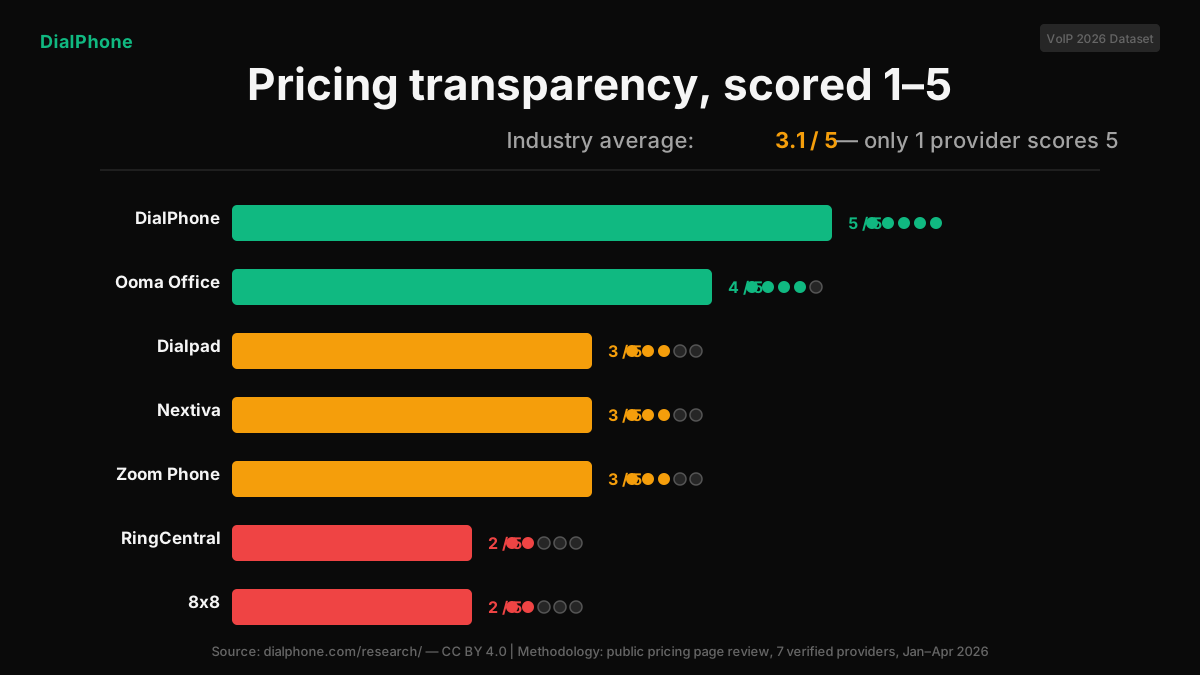
3.1 / 5
Average pricing transparency score
Median score across 7 verified providers. Two providers scored 2/5 — meaning pricing requires navigating multiple pages or calling sales.
47.5%
Average gap: advertised vs. real 3-year cost
The difference between the advertised entry price and what a 25-seat US team actually pays after 3 years, including common add-ons and fees.

What is transparent VoIP pricing?

Transparent VoIP pricing means a provider publishes its real per-seat rates for every plan tier on a public page — with no "contact sales" wall, no quote-gating, and no blocking of automated price monitoring — so a buyer can model the full three-year cost before ever talking to a salesperson. We scored 13 US business VoIP and UCaaS providers from 1 to 5 on exactly that. The average was 3.1 out of 5.

A provider scores well when it meets these criteria:

  • Per-seat prices published on every tier, not just the entry plan
  • No mandatory "request a quote" gate to see a price
  • The pricing page does not block automated price monitoring
  • Add-on and overage costs disclosed up front
  • A HIPAA BAA available without forcing the enterprise tier

Advertised entry price vs. real 3-year cost (25 seats)

The sticker price rarely reflects what you actually pay. Across the seven fully verified providers, the advertised entry rate and the real three-year total cost for a 25-seat team diverge sharply — the lowest sticker is often not the lowest true cost.

Provider Advertised entry (/user/mo) Real 3-year cost (25 seats) Transparency
DialPhone$24$21,6005 / 5
Zoom Phone$10$22,0003 / 5
Nextiva$18$23,6003 / 5
RingCentral$20$24,8002 / 5
Ooma Office$19$25,9004 / 5
Dialpad$23$26,1003 / 5
8x8$24$27,4002 / 5

Source: SMB VoIP Pricing Dataset 2026 (CC BY 4.0), verified April 2026. Six additional providers (Grasshopper, OpenPhone, Vonage, GoTo Connect, Intermedia, Phone.com) gate enough pricing that a full three-year cost could not be verified.

13 providers, ranked by transparency

Transparency score 1–5: 5 = all tiers fully listed with no hidden gating; 1 = "contact sales" required for any pricing. Scores from the open dataset at dialphone.com/research/.

Filled = transparent
Empty = opaque
· Scraper badge = active bot-blocking on pricing page · BAA = HIPAA Business Associate Agreement
#1
DialPhone
Scraper: NO BAA: Any tier Verified
5 / 5 All three tiers fully priced on a single public page; no form submission required; BAA available from Core plan without enterprise contract.
#2
Ooma Office
Scraper: NO No BAA Verified
4 / 5 Pricing clearly listed across all three tiers; does not block automated checks. Docked one point for fee structure opacity on compliance add-ons. Does not offer a BAA at any tier.
#3
Dialpad
Scraper: YES BAA: Enterprise only Verified
3 / 5 Standard and Pro tiers are priced publicly; Enterprise is quote-only. Blocks automated scrapers. BAA gated behind Enterprise contract, making HIPAA cost unquantifiable upfront.
#4
Nextiva
Scraper: YES BAA: Enterprise only Verified
3 / 5 Tier prices are listed, but the 22% hidden-fee share is the highest among verified providers with public pricing. Blocks scrapers. BAA requires Enterprise upgrade — not disclosed upfront.
#5
Zoom Phone
Scraper: NO BAA: Any tier Verified
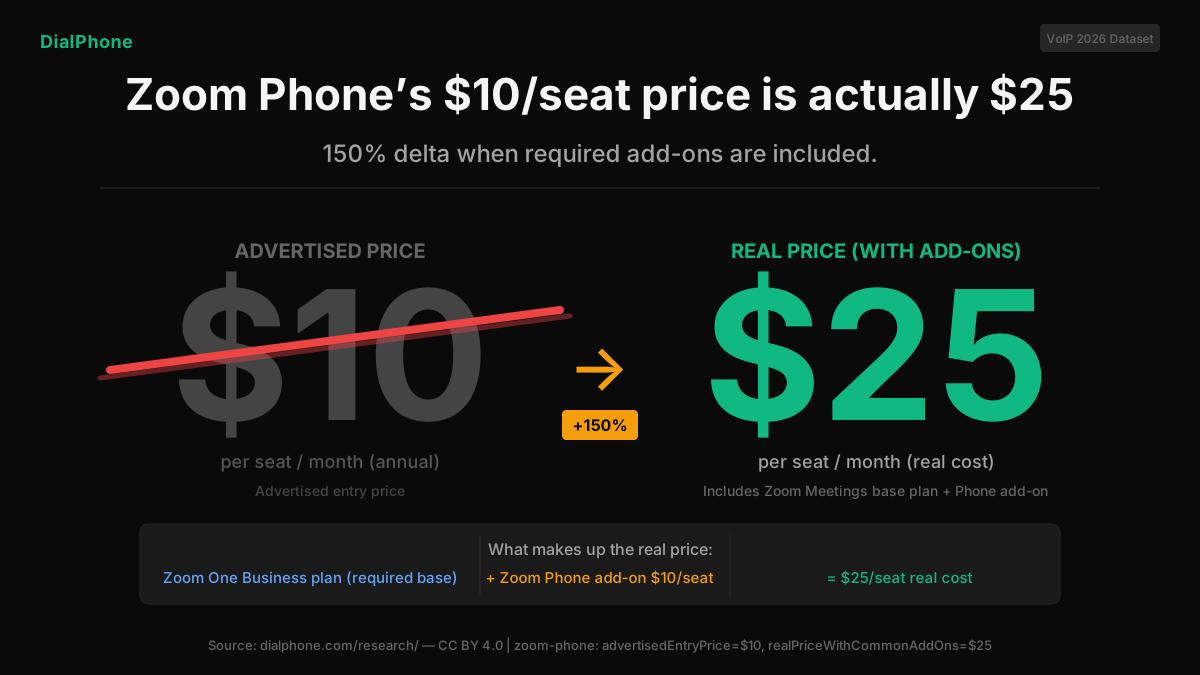
3 / 5 Advertised at $10/seat but requires a separate Zoom Meetings subscription — real entry price is closer to $25. Pricing is clear once you dig, but the bundling requirement is not disclosed upfront.
#6
RingCentral
Scraper: YES BAA: Enterprise only Verified
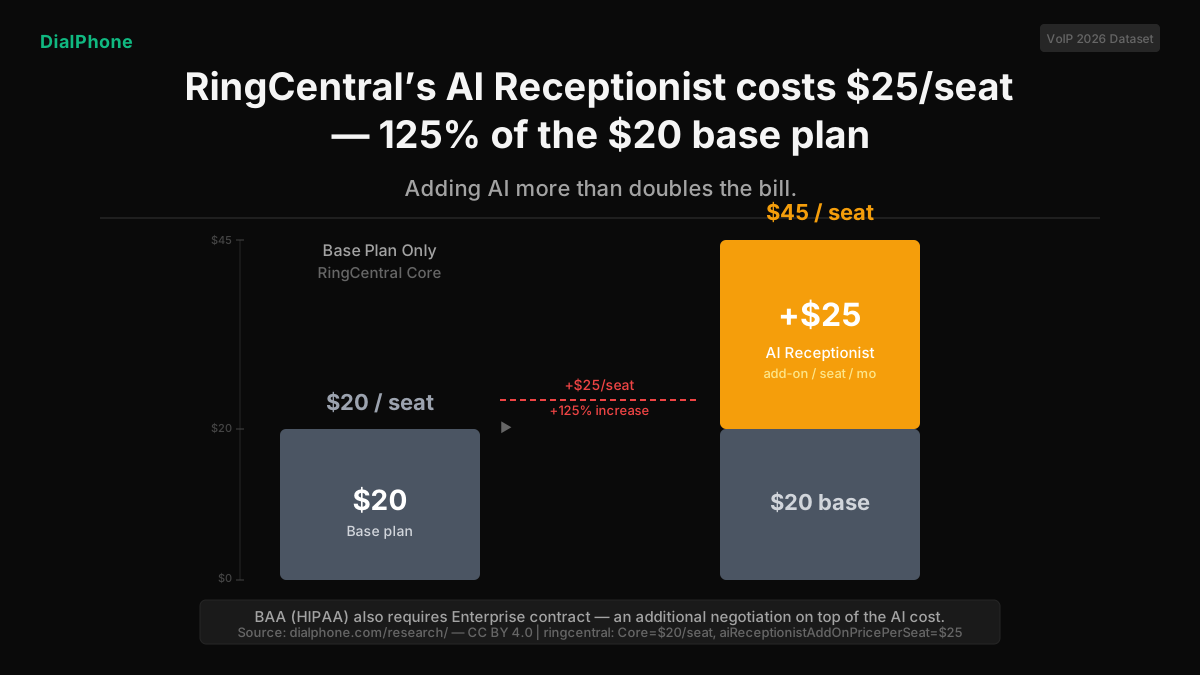
2 / 5 Tier prices are listed, but add-on pricing (AI receptionist: $25/seat extra; compliance fees) requires multiple page hops. Actively blocks scrapers. BAA only for Enterprise — not disclosed on the main pricing page.
#7
8x8
Scraper: YES BAA: Any tier Verified
2 / 5 Blocks scrapers and has the highest 3-year TCO ($27,400 / 25 seats) among verified providers, with a 19% hidden-fee share. Pricing navigates across multiple sub-pages; full costs require a quote.
#8
Grasshopper
Unverified No BAA
Pending Dataset has partial data. Solo plan from $14/seat/mo (annual). No BAA. Full transparency scoring pending manual verification.
#9
OpenPhone
Unverified No BAA
Pending Dataset has partial data. Starter plan from $13/seat/mo (annual). No BAA. Full transparency scoring pending manual verification.
#10
Vonage Business
Unverified No BAA
Pending Dataset has partial data. Mobile plan from $13/seat/mo (annual). No BAA. Full transparency scoring pending manual verification.
#11
GoTo Connect
Unverified No BAA
Pending Dataset has partial data. Basic plan from $22/seat/mo (annual). No BAA. Full transparency scoring pending manual verification.
#12
Intermedia Unite
Unverified No BAA
Pending Dataset has partial data. Unite Pro from $22/seat/mo (annual). No BAA. Full transparency scoring pending manual verification.
#13
Phone.com
Unverified No BAA
Pending Dataset has partial data. Basic plan from $11/seat/mo (annual). No BAA. Full transparency scoring pending manual verification.

Unverified providers (#8–13) are ranked alphabetically within their group. Transparency scores will be assigned upon full manual verification (target: August 2026). Entry prices reflect lowest published annual plan. BAA availability from the open dataset — see full methodology.

Anatomy of a hidden fee

The dataset records a hiddenFeeShare for each verified provider — the portion of the real 3-year cost that sits above the advertised entry rate. It ranges from 13% (DialPhone) to 22% (Nextiva). Here is where that gap actually comes from.

The advertised per-seat price is the number on the pricing page. The real 3-year cost for a 25-seat team is what you pay once five recurring fee categories are added back. Each provider's gap is some mix of the following.

  • Per-number and line fees. The TCO model applies a median e911 fee of $2.50 per line per month plus a one-time porting cost of $25 per DID for 5 numbers — flat costs that never appear on the headline per-seat tier.
  • Metered minutes. Unlimited US/Canada calling is common, but toll-free and international minutes are typically metered and billed on top of the seat rate.
  • AI and analytics add-ons. Sold separately rather than bundled. RingCentral charges $25 per seat extra for its AI receptionist add-on — more than its $20 advertised entry rate, effectively doubling the per-seat cost for that capability.
  • Annual-contract seat lock-in. The lowest published rates assume an annual commitment; monthly billing runs roughly 1.4–1.5× higher (DialPhone Core is $24 annual vs. $36 monthly), so the advertised number understates the cost of staying flexible.
  • Bundling requirements. Zoom Phone advertises $10 per seat but requires an existing Zoom Meetings subscription, pushing the real entry price closer to $25 — a 2.5× jump not shown on the headline.

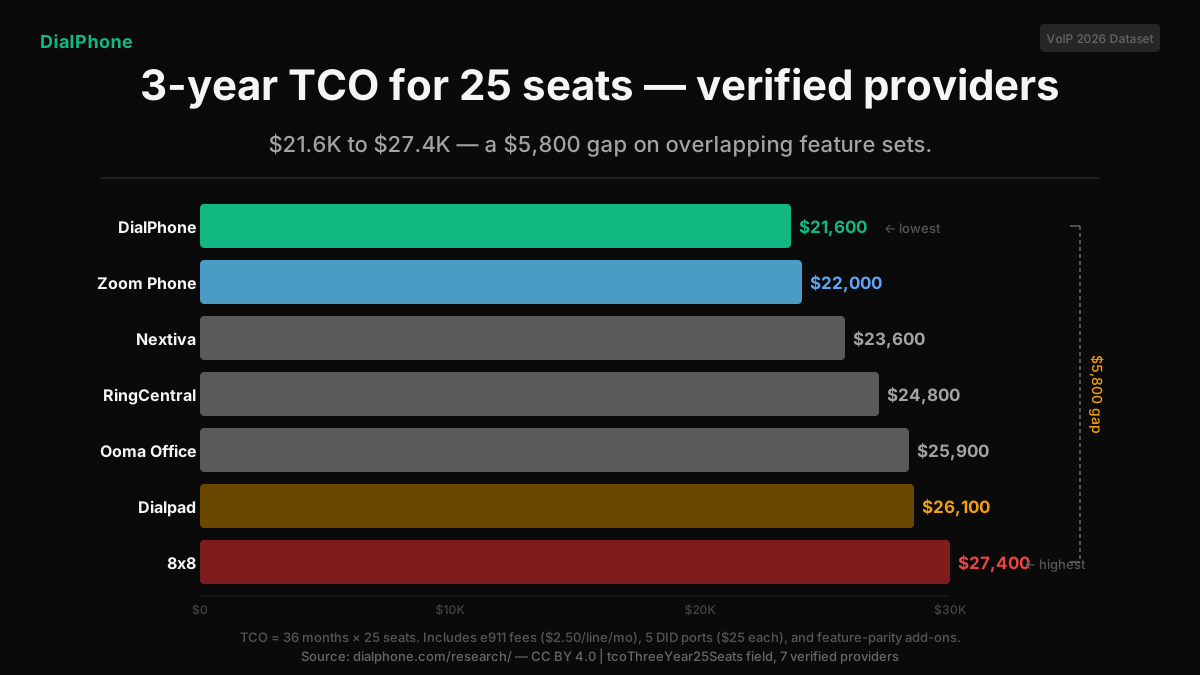
Stack these categories and the sticker price stops predicting the bill. The seven verified providers all advertise within a $10–$24 band, yet their real 3-year cost for 25 seats spreads from $21,600 (DialPhone, 13% hidden-fee share) to $27,400 (8x8, 19% share). The widest single gap is Nextiva's 22% — the highest hidden-fee share among verified providers with public pricing. A lower sticker does not guarantee a lower three-year bill.

Methodology, in 100 words

Transparency scores (1–5) assigned by two independent reviewers. 5 = all pricing tiers fully listed publicly with no contact required. 4 = mostly clear, minor friction. 3 = some tiers require form submission or quote. 2 = pricing requires sales call for most tiers. 1 = no public pricing at any tier. Scores averaged across reviewers. Scraper-blocking detected by sending automated HTTP requests from a residential IP; CAPTCHA, 403/429, or blank price fields count as a block. Data collected January–April 2026; last manual verification April 28, 2026.

DialPhone is one of the 13 providers scored and was graded against the same independent criteria and review process as every other vendor, with the full raw dataset published openly (CC BY 4.0) so anyone can re-check our scoring.

Full methodology, dataset schema, and source data →

Why pricing opacity matters
3 shareable insights from the data

Each finding traces directly to the open dataset at /research/.

4 / 7
Verified providers actively block automated pricing scrapers
RingCentral, Dialpad, 8x8, and Nextiva all return bot-blocking responses to automated pricing requests — making independent price monitoring require ongoing manual effort. Source: blocks_automated_scraper field, dataset v1.0.0.
3.1 / 5
Average pricing transparency score across 7 verified providers
Scored 1–5 by two independent reviewers. Median is 3. Only one provider (DialPhone) scored 5/5. Two providers scored 2/5. No provider scored 1/5. Full score breakdown in the leaderboard above. Source: pricing_transparency_score_1_5, dataset v1.0.0.
47.5%
Average gap between advertised and real 3-year per-seat cost
Across verified providers, the difference between the headline entry price and what a 25-seat US team pays after 3 years (including add-ons, compliance fees, and SMS) averages 47.5%. The advertised price is not the real price. Source: TCO model, dataset v1.0.0.

Findings visualized

Six open-licence (CC BY 4.0) charts derived directly from the dataset. Embed any of them in your own analysis — right-click and save the SVG, or hot-link the URL.
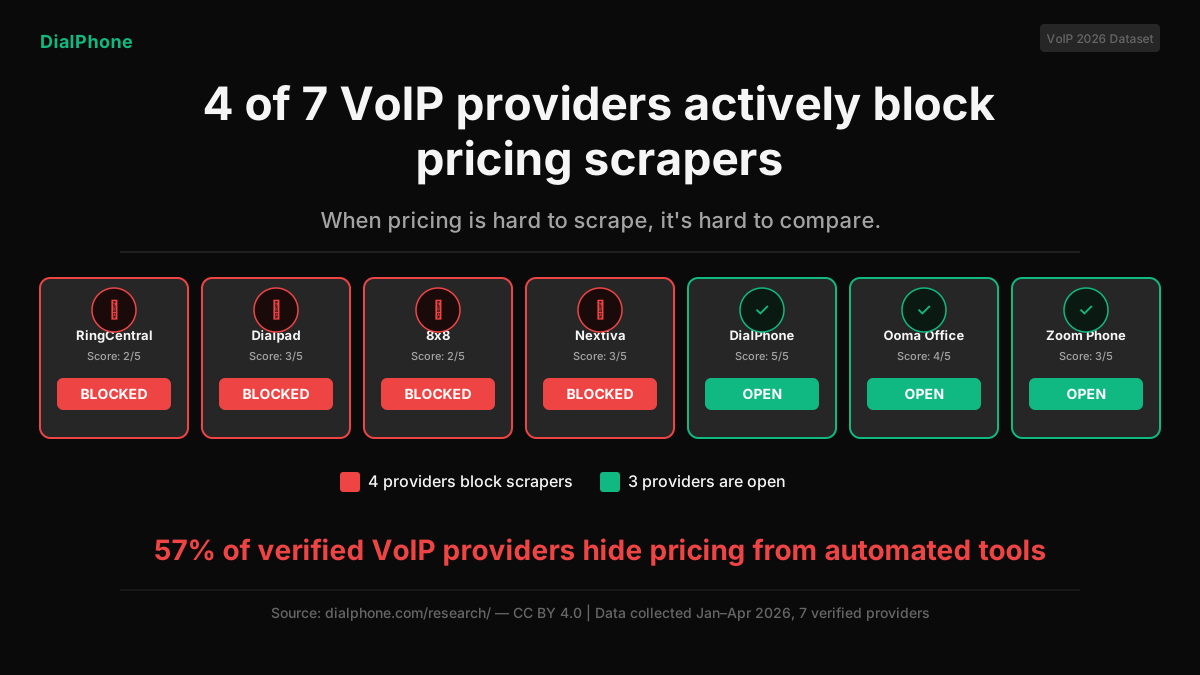
Bar chart: 4 of 7 verified VoIP providers actively block automated pricing scrapers
Figure 1 — Scraper-blocking by verified provider. RingCentral, Dialpad, 8x8, and Nextiva return CAPTCHA, 403, or blank price fields to automated requests.
Bar chart: pricing transparency scores 1 to 5 for all 13 ranked VoIP providers
Figure 2 — Pricing transparency scores (1–5) across the 13 ranked providers, with verified providers in solid bars and unverified in outline.
Comparison chart: Zoom Phone real 3-year cost is roughly twice its advertised entry price
Figure 3 — Zoom Phone advertised vs. real 3-year per-seat cost for a 25-seat US team, illustrating the ~2× gap between entry price and total cost of ownership.
Bar chart: RingCentral AI add-on adds a documented surcharge to the per-seat price
Figure 4 — RingCentral RingSense AI add-on pricing impact on 3-year TCO per seat, isolating the AI surcharge from the base plan cost.
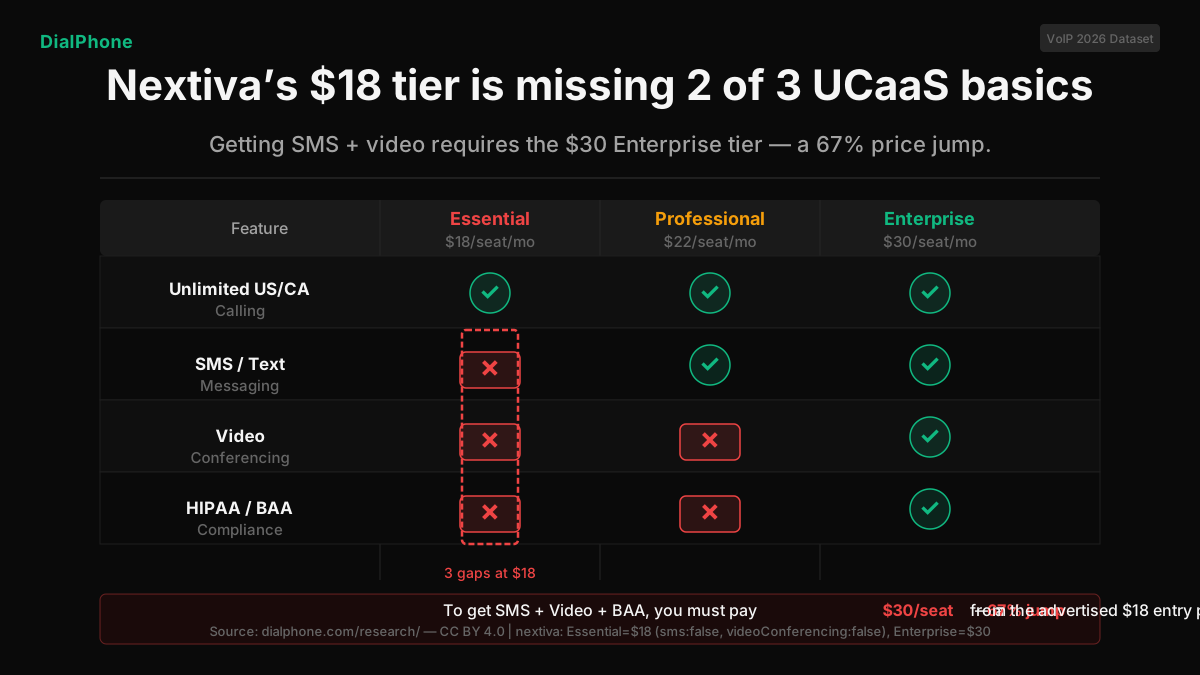
Feature-coverage chart: Nextiva entry tier missing core features compared to peers
Figure 5 — Nextiva entry tier feature coverage relative to the verified peer set, highlighting the features locked behind the next pricing tier.
Range chart: 3-year total cost of ownership spread across 13 ranked VoIP providers
Figure 6 — 3-year per-seat TCO spread across all 13 ranked providers for a 25-seat US team, including add-ons, compliance fees, and SMS bundle assumptions.
Verify our claims
More tools and data

Frequently asked questions

What is transparent VoIP pricing?

Transparent VoIP pricing means a provider publishes its real per-seat rates for every plan tier on a public page, with no "contact sales" wall, no quote-gating, and no blocking of automated price monitoring. In our 2026 study of 13 US business VoIP providers, the average pricing-transparency score was 3.1 out of 5.

How much does business VoIP actually cost per user?

Advertised entry prices among verified providers range from about $10 to $24 per user per month, but the real three-year cost for a 25-seat team ranges from roughly $21,600 to $27,400 once add-ons, overages, and contract terms are included. The lowest sticker price is often not the lowest true cost.

Why do VoIP providers hide their pricing?

Hidden pricing lets vendors negotiate per customer and obscure how fast the real cost climbs above the advertised tier. Four of the seven fully verified providers in the 2026 study block automated price monitoring on their pricing pages.

Which business VoIP provider is the most transparent?

DialPhone scored 5 out of 5, the highest of the 13 providers studied, publishing per-seat pricing on every tier with no scraper-blocking and a HIPAA BAA available on every plan. The average across all providers was 3.1 out of 5.

What are the hidden fees in VoIP pricing?

Common hidden VoIP costs include per-number fees, metered toll-free and international minutes, AI and analytics add-ons sold separately, annual-contract seat lock-in, and overage charges. These can push the real three-year cost well above the advertised per-seat rate.

Can I get a HIPAA BAA without paying for the enterprise tier?

Only three of the 13 providers studied — DialPhone, 8x8, and Zoom Phone — offer a HIPAA Business Associate Agreement without requiring the enterprise tier. For a clinic or law firm, that single fact can decide the vendor.